
Many players defeat the Marauder gank fight in Nightreign and enter the hidden crystal laboratory beneath the Great Hollow, only to accidentally select “Look into” on the large crystal.
This instantly ends the Scholar’s Remembrance, leaving players worried that they may have missed crucial lore, skipped unique dialogue, or locked themselves out of secret Scholar’s Remembrance content.
The question appears constantly in player communities:

“Did I miss important lore in the Scholar’s Remembrance? Did choosing ‘Look into’ too early skip missable content forever?”
This guide provides a clear, detailed explanation of:
- What the Marauder crystal room actually contains
- Which Scholar’s Remembrance lore is missable and which is repeated later
- Whether skipping the interactables affects rewards, endings, or story progression
- How the Research Annexe, Night essence experiments, and crystal curse lore connect
- What players lose—and don’t lose—by ending the remembrance early
Read more: How to Unlock Undertaker Chapter 5 in Nightreign ?
Quick Answer: No Critical Lore, Rewards, or Story Progress Are Lost
Choosing “Look into” on the crystal immediately ends the Scholar’s Remembrance, but it does not lock you out of important story content.
The only thing the player skips is a set of optional observation lines from the other interactables in the Marauder crystal room.
These lines add background details but do not change quests, endings, or item rewards.
There are no missable rewards, no hidden flags, and no alternate outcomes tied to reading every interactable. The core story of the Remembrance remains fully intact even if the player ends it early.
All essential information from the skipped interactables reappears later through:
- Scholar’s Journal entries that summarize the Research Annexe
- The Cleansing Tear item description, which explains its limits and purpose
- Night-Hued Glass, Bundled Paper, and Undertaker Remembrance lore, which restate the same conclusions
In practical terms, the Marauder room provides extra flavor text, not exclusive revelations. Players who accidentally skip the room still receive the full narrative about the Research Annexe, Night essence experiments, the crystal curse, and the Scholar’s conclusions from other sources in the game.
What the Marauder Room Is and Why It Matters
What the room is
After defeating the Marauder encounter beneath the Great Hollow church, the player enters a sealed crystal research chamber.
This hidden lab is part of the Research Annexe, a facility created to study and control the spread of Night essence. The Annexe’s purpose centers on three major research goals:
- Studying Night essence rising from the depths of the Great Hollow
- Observing and manipulating crystalisation, especially in living subjects
- Developing the Cleansing Tear, a stabilising artifact meant to control Night rather than erase it
In gameplay terms, this room serves as the final location of the Scholar’s Remembrance, where optional interactables reveal the history of the Annexe and its failed experiments.
Why the room exists
The Marauder room acts as a lore snapshot—a preserved moment from the Annexe’s final days. Its interactables highlight the consequences of attempting to weaponise or stabilise Night essence.
This single room links together several major story threads:
- The crystal curse spreading through the Great Hollow
- The failed human trials carried out by Annexe researchers
- The Scholar’s eventual crystallisation in the Undertaker Remembrance
The Scholar’s observations in this space allow the player to “read the scene” through his perspective.
Even if the interactables are skipped, these conclusions reappear later in journal entries, item descriptions, and Undertaker lore, ensuring the player still receives the essential story context.
What Each Interactable Was Trying to Tell
The Marauder crystal room contains several optional interact points, each designed to reveal a different layer of Research Annexe lore.
While players may skip these lines by ending the remembrance early, every interactable has a clear narrative purpose tied to the Night essence experiments and the crystal curse.
1. Research Annexe Background
This interactable provides the foundation for understanding the room’s purpose. It explains that:
- The chamber is part of a secondary research estate built beneath the Great Hollow.
- The Research Annexe was created to study and harness Night essence, not merely survive it.
- The crystal formations in the area are artificially influenced, shaped intentionally by researchers rather than forming on their own.
What this reveals:
The spreading corruption in the Great Hollow is not a natural disaster. It is the direct legacy of human experimentation with Night essence, carried out inside the Research Annexe. This sets the stage for understanding why the crystal curse becomes central to the region’s downfall.
Read more: Touching Phantoms in Nightreign: Does It Recharge Ultimate Art?
2. Experiment Logs – Early Trials and Failures
This interactable summarises the progression of the Research Annexe’s Night essence experiments. It outlines how the researchers moved from harmless observation to increasingly dangerous trials:
- Early work involved observing Night crystals and tracking how they reacted to shifts in the Great Hollow.
- Research escalated into direct Night infusion experiments on human test subjects, including soldiers, prisoners, or willing participants.
- Most subjects either:
- Fully crystalised and died, becoming inert statues, or
- Mutated into unstable, corrupted creatures, unable to control the Night essence inside them.
- Only a single partial breakthrough occurred, producing a prototype stabilisation method that eventually evolved into the Cleansing Tear.
What this reveals:
The Marauder enemies and the various crystal-cursed creatures encountered throughout the Great Hollow are not natural monsters. They are the direct results of failed containment experiments, created when humans attempted—and failed—to control Night essence. This provides a clear origin for many enemy types and ties their existence to the Annexe’s abandoned research.
3. Scholar’s Conclusion on the Cleansing Tear
This interactable highlights the Scholar’s final assessment of the Cleansing Tear after reviewing the Research Annexe’s notes and the results of their experiments. It clarifies three key points:
- The Cleansing Tear is a stabilising device, designed to manage and contain Night essence, not eliminate it.
- The Tear cannot rewrite fate, alter destiny, or fulfil wishes. It is a controlled scientific breakthrough, not a mystical or divine solution.
- Its power is practical and limited—valuable as a tool for survival, but incapable of changing the fundamental outcome of a person touched by Night.
What this reveals:
This conclusion reinforces a central theme found later in Scholar’s Journal entries, the Cleansing Tear item description, and Undertaker Remembrance lore. Even if the player skips the interactable, the game continues to present the Cleansing Tear as a functional instrument, not a miracle artifact. The Scholar consistently portrays it as the one successful stabilisation method produced by human experimentation, not a cure or fate-altering relic.
4. Link to Great Hollow and Undertaker
This interactable reveals how the Research Annexe’s actions directly shaped two major story arcs in Nightreign: the Great Hollow crystal curse and the events of the Undertaker Remembrance. It establishes three key connections:
- The spreading crystal curse throughout the Great Hollow is the final stage of Annexe experiments escaping containment. What began as controlled trials gradually expanded into a widespread, uncontrolled corruption of the region.
- The massive, suspended crystal formations found deep within the Great Hollow are not natural anomalies. They are unstable extensions of the same crystalisation processes the Annexe attempted to manipulate in its research.
- The crystallisation used to preserve or restrain early test subjects mirrors the phenomenon that later traps the Scholar himself in the Undertaker storyline. This shows that the Scholar becomes a direct victim of the same research he studied.
What this reveals:
This interactable unifies the narrative of Scholar’s Remembrance, the Great Hollow’s collapse, and the Undertaker Remembrance into a single continuous chain of events. It explains that the world’s current state of corruption is not random—it is the long-term fallout of the Research Annexe’s failed attempts to control Night essence and crystallisation. Even if the player skips this room, later lore entries reinforce these same connections clearly.
5. The Crystal Knight – Visual Foreshadowing
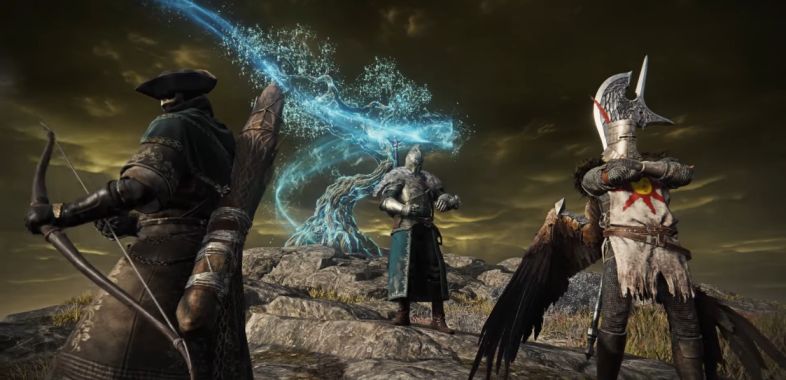
The final interactable is the large crystal containing a knight, positioned at the center of the research chamber. This is one of the most important visual lore elements in the Marauder room, serving several narrative purposes:
- The knight represents a “stable” test subject, someone who has undergone Night infusion but has not died or mutated. Instead, he remains suspended in a controlled crystallised state.
- His presence confirms that the Marauder knights and other armed figures encountered in the area were directly connected to the Research Annexe’s security force and early experiment trials.
- The suspended knight acts as direct foreshadowing for the Scholar’s own crystallisation seen later in the Undertaker Remembrance, demonstrating that this form of containment is part of a repeated pattern, not an isolated accident.
What this reveals:
The crystal knight serves as a visual prototype for the fate that eventually befalls the Scholar. Instead of depicting death, the crystallised state represents stabilised imprisonment—a method the Annexe used to restrain, preserve, or control living subjects touched by Night essence.
This reinforces the idea that crystallisation in Nightreign is not merely a destructive force but also a tool of containment, tying together the themes of human experimentation, failed control, and repeated tragedy across multiple Remembrances.
Tips: How to Handle Remembrances and Lore Safely
1. Explore all interactables before committing to major actions
In any Remembrance, certain prompts signal a point of no return. Options such as “Look into,” “Offer self,” “Accept,” or interacting with large crystals, altars, or central objects often end the sequence immediately.
To avoid skipping lore:
- Inspect every glowing interactable first.
- Treat major objects as final steps, not the first thing to touch.
- Use the room’s layout as a guide—side interactables usually contain optional lore text, while the central object triggers completion.
This approach helps prevent unintentionally missing dialogue in areas like the Marauder crystal room during Scholar’s Remembrance.
Read more: Why Caligo’s Crystal Attack Causes Major FPS Drops in Nightreign DLC
2. Use journal entries as a reliable backup lore source
The game is designed so that essential story elements reappear in:
- Scholar’s Journal entries
- Item descriptions connected to Remembrances
- Lore items such as Night-Hued Glass and Bundled Paper
If a player accidentally skips an interactable, opening the Journal after completing the quest will usually present the same key conclusions. This ensures that central lore—especially regarding the Research Annexe, Night essence, and the Cleansing Tear—remains accessible.
3. Separate “flavor text” from “progress flags”
Many interactables exist purely for worldbuilding. These optional interactions:
- Do not grant items
- Do not trigger quests
- Do not update objectives
Instead, they reinforce themes or provide background context.
In contrast, important triggers usually involve:
- Item rewards
- Quest updates
- New objectives or Remembrance endings
Knowing the difference helps players recognize when skipped content is simply flavor lore rather than essential progression.
4. For completionists: plan a second, lore-focused run
Most Remembrances in Nightreign are not replayable within the same save file. Once a Remembrance is completed—even accidentally—it cannot be reopened.
Players aiming to experience:
- every interactable,
- every lore line, and
- every camera angle
should plan a second playthrough dedicated to full exploration. With knowledge of where one-shot interactions occur—such as the Marauder room in Scholar’s Remembrance—a completionist run becomes straightforward and satisfying.

Comparison Table: What Changes If You Click Early?
The table below shows how different player choices inside the Marauder crystal room affect Scholar’s Remembrance, including what lore you see, what rewards you receive, and whether long-term progression changes.
| Scenario | What You See in the Room | Rewards Gained | Lore Coverage | Long-Term Impact |
|---|---|---|---|---|
| Explore all interactables, then inspect the final crystal | All Research Annexe notes, experiment logs, and the full crystal knight interaction | Cleansing Tear + standard Remembrance completion | Maximum lore detail; full understanding of Annexe research and crystal curse origins | No effect on endings, flags, or story progression |
| Click “Look into” immediately | Only the final crystal interaction; all optional interactables are skipped | Cleansing Tear + standard Remembrance completion | Skips room-specific flavor text; major lore appears later in journals and item descriptions | No impact on endings, rewards, or storyline |
| Skip optional journals or lore items later in the game | Same room experience as above | Same core Remembrance rewards | Misses some repeated explanations found in Scholar’s Journal, Cleansing Tear, Night-Hued Glass, etc. | Slightly weaker understanding of the overall backstory |
What this comparison explains
- All scenarios give the same gameplay outcome, including the Cleansing Tear and full quest completion.
- The only difference is how much optional lore the player reads.
- The main narrative—covering Research Annexe experiments, the crystal curse, and the Scholar’s conclusions—remains intact because it appears again in multiple sources throughout Nightreign.
In short:
Whether the player explores every interactable or ends the Remembrance immediately, the story progression and final rewards never change. Only the amount of local flavor lore in the Marauder room varies.
Read more: Unable to Purchase the Nightreign DLC? Missing Buy Button, Not Available, or Can’t Add to Cart
Conclusion: Missable Flavor, Not Missable Story
The Marauder crystal room in Scholar’s Remembrance contains several optional lore observations that help the player understand the deeper background of Nightreign. These interactables add context about:
- The Research Annexe and its hidden role beneath the Great Hollow
- The origins of Night essence experiments and how they created the crystal curse
- The Scholar’s assessment of the Cleansing Tear, clarifying that it stabilises Night but cannot change fate
- The visual and narrative foreshadowing that connects this Remembrance to the Undertaker Remembrance and the Scholar’s own crystallisation
Selecting “Look into” too early skips these optional lines, but it does not remove essential lore.
All key explanations reappear later through Scholar’s Journal entries, item descriptions, and Undertaker-related lore items.
No endings, quest routes, rewards, or long-term story flags are affected.
For players searching variations of:
- “Did I ruin my run in Scholar’s Remembrance?”
- “Did clicking Look Into skip important lore?”
- “What did I miss in the Marauder room?”
the answer is straightforward:
Only optional flavor text is missable. The main story, core lore, and gameplay rewards remain fully intact.