
U.S. troops are still in Syria after Bashar al-Assad was ousted because ISIS remains an active threat, local forces cannot yet fully secure key regions on their own, and the United States wants to prevent a security vacuum that could allow terrorist groups to regroup.
While the U.S. military presence has been significantly reduced, Washington continues limited, conditions-based operations focused on counter-ISIS missions, intelligence gathering, and partner support.
This explains why the U.S. has not fully withdrawn from Syria despite major political changes in Damascus.
Why hasn’t the U.S. left Syria yet?
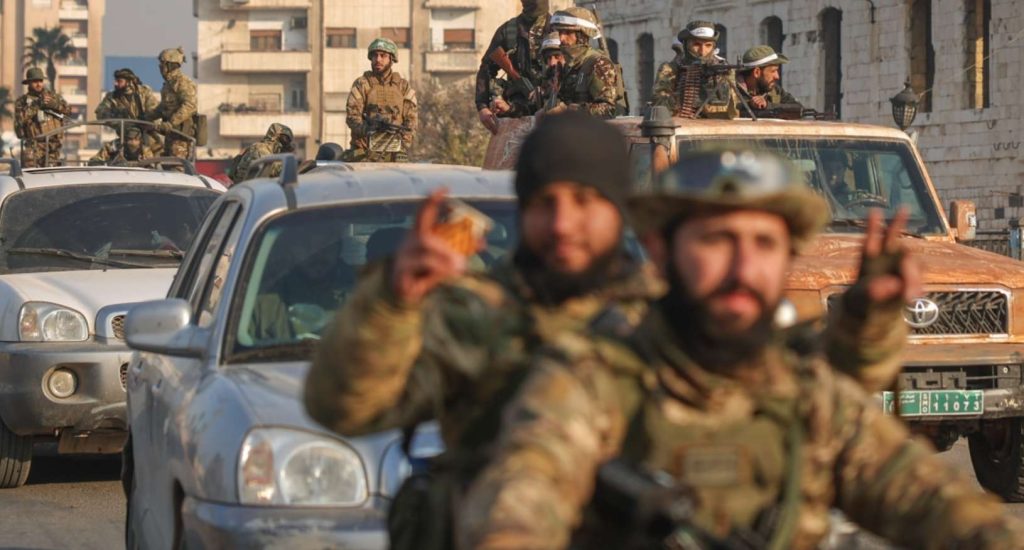
The primary reason the U.S. has not left Syria is that ISIS was defeated territorially but not eliminated.
Although ISIS lost all its territory by 2019, the group transitioned into an insurgent network, carrying out assassinations, ambushes, and small-scale attacks—especially in eastern and northeastern Syria. U.S. military officials consistently warn that a rapid withdrawal could allow ISIS cells to rebuild leadership, financing, and operational capacity.
In short, the U.S. presence is meant to prevent an ISIS comeback, not to control Syrian politics.
What is the U.S. mission in Syria now?
The current U.S. mission in Syria is narrow and limited, not a full combat deployment.
Core objectives include:
- Fighting ISIS remnants through intelligence and targeted operations
- Advising and supporting local partner forces, primarily the Syrian Democratic Forces (SDF)
- Securing ISIS detention facilities and camps, which hold thousands of fighters and family members
- Maintaining surveillance and rapid-response capability against emerging threats
U.S. troops are not engaged in large-scale battles and are not attempting to govern territory.
Are U.S. troops still fighting ISIS in Syria?
Yes. U.S. troops are still involved in counter-ISIS operations in Syria, but mostly in a support and intelligence role.
American forces:
- Assist with planning and intelligence
- Provide air support and reconnaissance
- Conduct limited direct-action missions when high-value ISIS targets are identified
Most ground fighting is carried out by local partner forces, not U.S. soldiers.
How many U.S. troops are still in Syria in 2025?
As of 2025, the U.S. military presence in Syria is under 1,000 troops, down from several thousand in earlier years.
These troops are concentrated in:
- Northeastern Syria, where ISIS activity and detention camps are located
- The al-Tanf base near the Syria-Iraq-Jordan border, a strategic outpost used for counter-terrorism and regional monitoring
The U.S. has deliberately shifted to a smaller, consolidated footprint to reduce risk while maintaining operational capability.
Why does the U.S. support the Syrian Democratic Forces (SDF)?
The Syrian Democratic Forces are the primary local partner that helped defeat ISIS territory during the peak of the war.
The U.S. continues to support the SDF because:
- They control key areas once held by ISIS
- They guard prisons and camps holding ISIS detainees
- No other local force currently has the capacity to replace them quickly
A sudden collapse of SDF security could lead to mass detainee escapes and renewed violence.
Is the U.S. fighting the Syrian government?
No. U.S. troops are not actively fighting Syria’s government.
While the U.S. does not formally recognize or support Damascus, the American military presence is focused almost entirely on ISIS, not regime change. Direct clashes with Syrian government forces are avoided unless U.S. troops or partners are threatened.
What would happen if U.S. troops left Syria completely?
U.S. defense and intelligence assessments consistently warn of several risks if troops leave too quickly:
- ISIS cells could regroup
- Detention camps could destabilize
- Local partner forces could lose territory
- Regional militias and foreign actors could escalate conflicts
This is why U.S. policy favors a conditions-based withdrawal, not a fixed deadline.
Are U.S. troops planning to leave Syria soon?
The United States has signaled that it intends to reduce its presence further, but only if conditions allow.
A full withdrawal would likely require:
- Local forces capable of securing territory independently
- Stable management of ISIS detainees
- Sustained reduction in ISIS attack capability
Until those conditions are met, the U.S. military presence is expected to remain limited but active.
Why the U.S. military presence in Syria continues — final summary
The U.S. has not fully left Syria after Assad’s ouster because:
- ISIS is still active
- Local forces still depend on U.S. support
- A security vacuum could destabilize the region
- The U.S. wants to prevent terrorism from re-emerging
Rather than occupation, the strategy is containment, prevention, and gradual disengagement.
Read more news : Hailee Steinfeld Pregnant Photos: Images, Instagram Announcement & What’s Real