
If your base keeps flirting with power shortages or you’re tired of generators choking mid-automation, this one’s for you.
This Endfield HC battery layout delivers a consistent 6 HC batteries per minute and translates into around 4.4k stable power, all in a compact setup that slots neatly into a HUB PAC corner.
No gimmicks, no overengineering — just a layout that keeps the packaging unit working instead of idling, and gives you power you can actually rely on.
This guide breaks down why it works, who it’s for, and how to use it without wrecking your base in Arknights: Endfield.
At its core, this setup is built around keeping the HC battery packaging unit at near-constant uptime. The production chain is balanced so inputs arrive exactly when needed, preventing stalls, backups, or wasted cycles.
That consistency is what turns battery output into stable power instead of short bursts that drop off mid-automation. The layout is especially useful for mid-to-late game players running HUB PAC automation who want a reliable power backbone without redesigning their entire factory.
Drop it in, wire it up cleanly, and you can stop babysitting your power grid and focus on expanding the rest of your base.
Quick Answer (What You’re Really Here For)
Output: 6 HC batteries per minute
Power: ~4,400 total, stable
Uptime: Near-constant packaging operation
Placement: HUB PAC corner friendly
Scales: Easily (mirror it for ~8.8k power)
Blueprint Code:
EFO01602IEIu8u71uO83e
If you just want a working Endfield HC battery layout, you can honestly stop scrolling here. This setup already tells you everything that matters at a glance: solid output, stable power, and a footprint that won’t fight your HUB PAC layout. It’s designed to keep the packaging unit running smoothly instead of stalling every few cycles, which is where most battery builds fall apart.
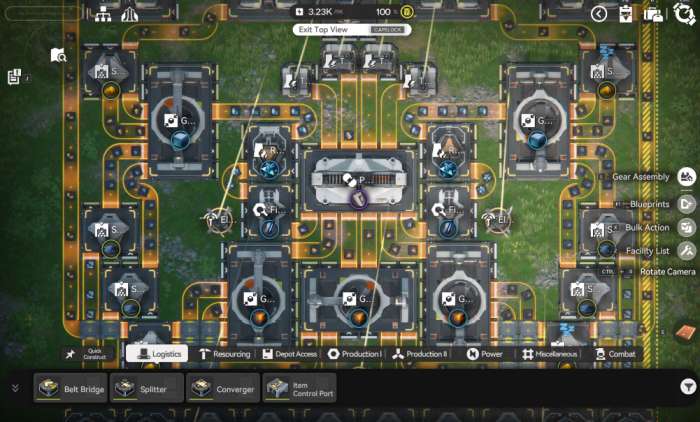
If you want to understand why this layout stays stable, how it avoids downtime, and what makes it reliable in Arknights: Endfield, keep reading. The details below explain what’s happening under the hood and how to use it properly without breaking your power grid.
Who This Layout Is Actually For
This setup really shines if you’re already past the early scramble phase and starting to care about stable, predictable power instead of barely scraping by. It’s a great fit if you’re in the mid to late game, running HUB PAC automation, and tired of dealing with power spikes that dip the moment production ramps up.
If you’re specifically looking for a compact HC battery farm that doesn’t sprawl across half your base, this layout checks that box cleanly.
That said, it’s not meant for early-game rush builds. HC battery production only works properly when you have steady material inputs and a power grid that can support continuous operation. Without that foundation, the layout will feel overkill at best and inefficient at worst.
Why This HC Battery Layout Works So Well
Everything here revolves around one simple goal: keep the packaging unit running at all times. If that unit slows down or idles, the whole HC battery chain starts to wobble, and your power output drops fast. This layout is built specifically to avoid that problem by making sure the packaging unit is never waiting on inputs or power.
Packaging Unit Math (The 6/Min Part)
- One packaging cycle takes 10 seconds
- Each cycle produces 1 HC battery
- That works out to 6 HC batteries per minute, which is the maximum sustainable rate for a single packaging unit in Arknights: Endfield
The key idea here is consistency. HC batteries don’t reward burst production — they reward steady, uninterrupted output. If the packager idles even briefly, your effective power generation drops and the whole setup starts feeling unreliable. This layout keeps inputs flowing smoothly and power stable so the packager almost never stops, which is exactly why it performs so well compared to more chaotic or oversized battery builds.
Production Flow (No Guesswork)
This layout works because the production flow is deliberately balanced, not because it brute-forces output with extra machines. Each step is tuned to feed the packaging unit at exactly the rate it needs.
Amethyst Chain (Perfectly Balanced)
Refining Unit:
Produces 1 amethyst fiber every 2 seconds, which comes out to 30 fibers per minute.
Fitting Unit:
Consumes 5 amethyst fibers per cycle and outputs 1 amethyst part every 10 seconds.
That timing lines up exactly with the packaging unit’s cycle. The fitting unit delivers one part right when the packager is ready for it, which means no shortages, no overfill, and no idle time. This is the backbone of the entire HC battery layout.
Originium Powder (Intentionally Overproduced)
On the originium side, the setup does the opposite — and that’s intentional.
- A shredding unit produces far more originium powder than the packaging unit actually needs
- The packaging unit only consumes 6 powder per minute
This overproduction ensures the packager never waits on powder, even if there’s minor routing delay or temporary backup elsewhere. Any excess powder isn’t wasted either — it can be routed into other production lines or saved for future expansion. That’s what makes this layout easy to scale later without tearing apart the core design.
How This Turns into ~4.4k Power
HC batteries aren’t about burst power — they’re about consistency over time. This layout leans fully into that idea. By keeping the packaging unit running smoothly and feeding HC batteries into battery banks or thermal systems at a steady pace, power output stays stable instead of spiking and crashing whenever production hiccups.
Because the batteries arrive evenly, the banks don’t starve or overflow, which is what usually causes power swings in less disciplined builds. With compact, efficient bank placement, players reliably see around 4.4k power from a single setup in Arknights: Endfield. It’s not about squeezing out peak numbers — it’s about having power that doesn’t drop the moment your base gets busy.
And if you need more? The layout scales cleanly. Mirror it on another HUB PAC corner, hook it into the same grid, and ~8.8k power is absolutely within reach without redesigning the entire system.
Using This as a Battery Farm (Easy Mode)
Want to run this as a pure HC battery farm instead of a local power node? Good news — you don’t have to redesign anything.
Here’s all you need to do:
- Remove one or more battery banks from the output side
- Route the packaging unit’s output directly into a stash or depot
- Ship the HC batteries to whatever region or power cluster needs them most
That’s it. No logic changes, no production tweaks, and no rebuild required. Because the core layout is already balanced around constant packaging uptime, it works just as well exporting batteries as it does feeding a local grid. It’s a simple switch that gives you a flexible, scalable HC battery farm whenever your base outgrows a single power node.
Placement Tips (Read This Before Blaming the Blueprint)
Before you assume the layout is broken, double-check the basics. Most issues people run into with HC battery builds come down to placement, not production logic.
- Always use depots between stages
This prevents backups that can quietly stall the packaging unit. Even a short blockage upstream can cascade into downtime if there’s no buffer. - Check power coverage first
One missing or overstretched pylon is enough to idle the packager. Make sure every machine is fully inside the power grid before hitting play. - Avoid corrosion tiles
Corrosion will slowly eat your structures and force constant repairs. If the area is unsafe, it’s better to move the layout than babysit it forever.
When placed cleanly with proper buffering and power coverage, the packaging unit should barely ever rest, which is exactly what this layout is designed to achieve.
Common Issues & Fixes
Even solid layouts can look broken if one small thing goes wrong. If something isn’t working, check these before tearing everything down.
Packaging Unit Keeps Idling
This is the most common issue and almost always has a simple cause:
- Fitting unit blocked or a depot is full, stopping parts from reaching the packager
- Power flickering, even briefly, which pauses production cycles
- Output stash backed up, leaving the packaging unit nowhere to send batteries
Fixing any one of these usually brings the layout back to full uptime.
Power Feels Unstable
If your power graph looks spiky instead of flat:
- Add a small buffer battery bank nearby to smooth demand
- Don’t stretch power pylons too thin — long chains are prone to flicker under load
Blueprint Won’t Place
If the blueprint refuses to deploy:
- Terrain collision blocking one or more structures
- Quest-locked tiles that aren’t usable yet
- Region protocol capacity exceeded, even if it looks like there’s space
Nine times out of ten, the issue is placement or environment, not the layout itself.
Why Players Keep Using This Layout
Players stick with this HC battery layout for one simple reason: it just works. It hits the maximum sustainable HC battery output, keeps the packaging unit running without constant intervention, and doesn’t need you hovering over it every few minutes to fix stalls or power dips. Once it’s placed and powered correctly, it runs quietly in the background and does its job.
It also fits cleanly into modular base designs, especially HUB PAC setups, without forcing you to tear everything apart. And when your power needs grow, it scales smoothly — you can mirror or expand it without redesigning the entire factory.
If you searched for “Endfield HC battery layout”, “HC battery 6 per minute”, or “4.4k power Endfield”, this is exactly the kind of reliable, no-drama setup you were hoping to find.
Final Take
If you want steady power without the drama, this Endfield HC battery layout gets the job done. It’s compact, predictable, and — most importantly — it doesn’t fall apart the moment you stop watching it. Once everything is placed and powered correctly, the layout just runs, quietly doing its thing in the background.
Drop it into a HUB PAC corner, wire it up once, make sure your inputs are stable, and you’re done. No constant tweaking, no emergency fixes, no babysitting the packaging unit. At that point, you can stop worrying about your power grid and get back to what actually matters: expanding your base and playing the game.
Read also: