
Players ask about commerce coins because the cat-minigames look finite and it’s unclear how the currency refreshes.
If you’re stuck wondering how to get more commerce coins, here’s the easiest way to farm them reliably.
Quick Fix
Commerce coins come from minigames that do refresh, Jade Fish exchanges, and certain shop-related activities that reset daily or weekly depending on the zone.
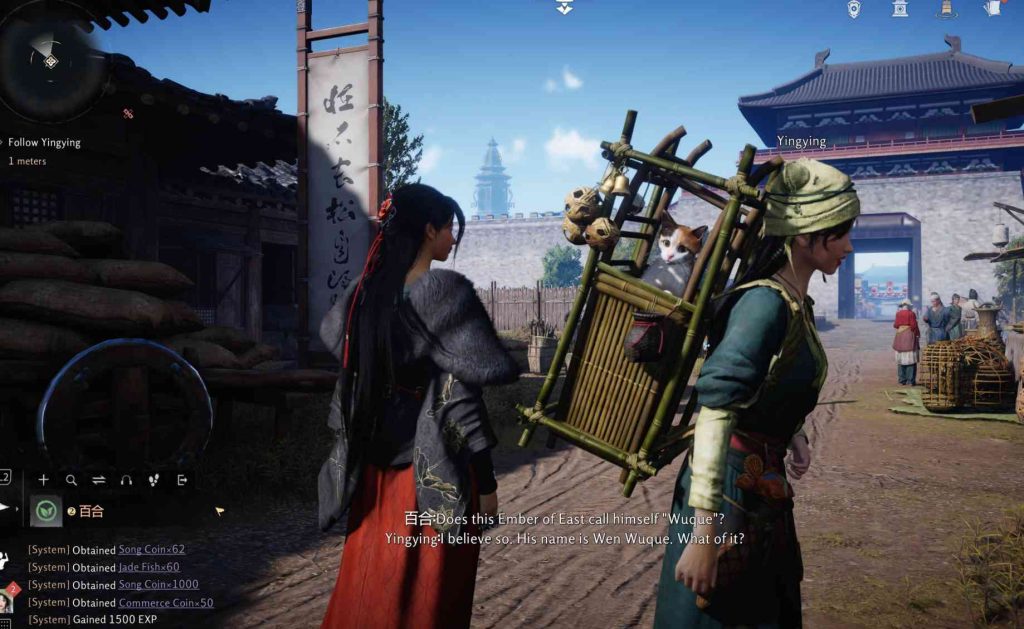
Step 1: Use Cat Minigames That Refresh Daily
The commerce coins system is tied to daily resets, so the cat minigames aren’t actually one-time.
Most players think they’re finite because the reset timer isn’t obvious.
Instructions:
- Visit the cat merchant and check available minigames.
- Complete each minigame once per reset cycle.
- Return after server daily reset to find them refreshed.
- Prioritize the fastest minigames for efficient coins.
- Stack coins and exchange them weekly if needed.
Testing Step:
Check the cat again after the daily reset—if the minigames reappear, they’re on a 24-hour refresh cycle.
Root Cause:
Players assume the minigames are finite because the game never shows a cooldown timer.
Step 2: Exchange Jade Fish for Commerce Coins
Commerce coins can also be purchased with Jade Fish, which becomes useful once you don’t need to buy bigger items.
This is a reliable backup source.
Instructions:
- Save your Jade Fish from exploration and events.
- Visit any Jade Fish merchant.
- Look for the commerce coin exchange option.
- Exchange as needed—but don’t overspend early-game.
- Use Jade Fish only when minigames aren’t enough.
Testing Step:
After exchanging, check your coin balance to confirm the Jade Fish conversion worked.
Root Cause:
The Jade Fish exchange is hidden behind late-game spending, so many players never notice it.
Step 3: Do Shop-Related Activities in Major Cities
Some commerce coins come from regional shop tasks and merchant interactions.
These scale as you progress through city quests.
Instructions:
- Visit major hubs like Kaifeng or Qinghe.
- Interact with merchants offering commerce tasks.
- Complete simple errands or trade missions.
- Collect commerce coins from regional rewards.
- Revisit hubs after daily reset.
Testing Step:
Check your rewards after completing merchant errands—commerce coins are often included.
Root Cause:
Players often skip shop errands, not realizing they reward commerce currency.
Commerce Coins – Table Summary
| Method | How It Works | Reset / Limit | Notes |
|---|---|---|---|
| Cat Minigames | Play minigames from the cat merchant to earn commerce coins | Daily Reset | Many players don’t realize these refresh every day |
| Jade Fish Exchange | Trade Jade Fish directly for commerce coins | Unlimited (resource-limited) | Best used when you no longer need Jade Fish for big items |
| City Shop Tasks | Do errands, merchant requests, or trade missions in major cities | Daily / Area-based Reset | Found in hubs like Kaifeng & Qinghe |
| Event Rewards | Some world events drop small amounts of commerce coins | Event-dependent | Not consistent but adds up over time |
| Exploration Bonuses | Certain region-completion rewards include commerce coins | One-time per region | Good early-game boost |
| Seasonal/Weekly Shops | Some rotating shops allow commerce coin rewards | Weekly Reset | Appears in higher-level zones |
Do commerce coins come from repeatable minigames, or are some of them secretly on a daily reset timer?
Commerce Coins usually come from repeatable minigames, but many of them do have a hidden daily reset limit, which is why the income feels inconsistent.
Some mini-tasks let you farm freely, but others quietly cap rewards once you hit a soft daily threshold.
Most players notice the slowdown after:
- Doing too many trade or delivery minigames in a row
- Repeating the same merchant task too quickly
- Hitting the region’s daily activity limit without realizing it
When the caps kick in, the rewards drop or stop altogether until the next server reset.
This makes it seem like some minigames are unlimited, but in reality the system rotates between soft and hard daily limits.
Checking which activities refresh daily helps you plan a stable Commerce Coin route.
Are there hidden vendors or traveling merchants who exchange other currencies for commerce coins?
Yes — several hidden or traveling merchants exchange lesser currencies, trade tokens, or event items for Commerce Coins.
These NPCs usually appear in markets, caravan routes, port towns, or festival areas, and they rotate depending on the time or region.
Players often overlook vendors who offer:
- Small Commerce Coin bundles
- Exchange rates for crafting drops
- Timed offers during merchant events
- Deals that rotate weekly
Some appear only during certain hours or after activating a nearby discovery point.
If you haven’t explored the marketplace alleys or checked the traveling merchant caravans, you may be missing easy currency conversions.
Finding these traders massively boosts early-game Commerce Coin income.
Do certain open-world activities—trading, escort quests, or market events—reward small amounts over time?
Yes — the game spreads tiny Commerce Coin rewards across several open-world systems.
They aren’t advertised well, but over time they add up.
These activities include:
- Trade route escorts
- Light merchant delivery tasks
- City market challenges
- Traveling caravan events
- Occasional random encounters with traders
Each activity gives only a small amount, but the idea is steady accumulation while exploring.
Players who engage with city hubs and roadside merchant events end up earning far more than those who rely only on minigames.
It’s meant to create a background income stream while you play normally.
Is the supply actually finite early on but expands once you unlock more regions or guild systems?
Yes — early-game Commerce Coins feel extremely limited because the game intentionally restricts sources until you unlock more regions.
Once you progress, new systems suddenly open up and your income grows dramatically.
You unlock more Commerce Coin sources after gaining access to:
- New cities with their own markets
- Guild or association systems
- Regional trade networks
- Mid-game merchant factions
This creates the illusion of scarcity at first, but the coin supply expands as your world opens.
Players who push story progress or regional access notice their Commerce Coin income nearly doubles without changing their routine.
Do higher-tier reputation levels with specific towns increase your ways to earn commerce coins?
Absolutely — reputation directly influences how many Commerce Coin sources you have.
Higher tiers unlock additional merchant services, boosted payouts, and new daily tasks.
You gain more options when you raise reputation with:
- Trade towns
- Merchant districts
- Caravan factions
- Artisan guilds
Each tier opens new Commerce Coin jobs, better exchange rates, or exclusive events.
If your income feels low, your town rep is likely the bottleneck.
Once upgraded, your earning routes expand dramatically.
Are players missing a daily quest chain that grants consistent commerce coins?
Yes — many players overlook a small daily quest chain that consistently rewards Commerce Coins.
These quests often start from a minor merchant, city bulletin board, or a worker NPC standing near a market stall.
Daily tasks usually include:
- Simple deliveries
- Short trade errands
- Basic merchant assistance tasks
Because they’re easy to miss and unlabeled as “commerce tasks,” most players skip them accidentally.
Completing this chain every day provides the most stable Commerce Coin income early on.
Do commerce-based world events respawn weekly, offering a bigger batch of coins?
Yes — many commerce-themed world events run on weekly or multi-day timers, giving much larger rewards than daily minigames.
These events often involve caravans, trade fairs, escort missions, or supply deliveries that reset only after the weekly cycle refreshes the entire region.
Players commonly notice big coin drops from:
- Weekly merchant convoys
- Rotating marketplace festivals
- Regional trade competitions
- High-value escort missions
These events are designed to give a “burst income” compared to the steady trickle from daily tasks.
If your coin income feels low, it’s often because you haven’t hit the weekly reset window yet.
Once these events respawn, you usually get a large chunk of commerce coins in one run, making them the core of long-term income.
Most players rely on these weekly events once they outgrow low-tier minigames.
Is Jade Fish intended to be the long-term repeatable conversion method once minigames dry up?
Yes — Jade Fish is typically designed as the scalable, long-term repeatable currency conversion system after you exhaust daily or weekly activities.
While minigames give early-game income, Jade Fish creates a more flexible late-game loop where you can convert earned or traded materials into commerce coins at your own pace.
Players often shift to Jade Fish because it provides:
- No strict daily caps
- Steady conversion without needing events
- A sink-and-source loop for unwanted resources
- Predictable income when open-world rewards slow down
As you unlock more zones, you naturally acquire more materials and exchange tokens, making Jade Fish the primary income engine.
It isn’t meant to replace minigames early — it simply becomes more efficient once your progression starts generating excess resources.
For most players, Jade Fish ends up being their most reliable long-term commerce coin generator.
Do treasure chests or exploration puzzles occasionally drop commerce coins as rare rewards?
Yes — treasure chests, hidden caches, and exploration puzzles often have a low chance of dropping commerce coins.
The game treats them as bonus rewards instead of a primary income source, so they appear inconsistently.
You’ll usually find them from:
- Puzzle shrines and environmental challenges
- Timed chests that appear after defeating elites
- Hidden alcoves or rooftop caches
- Exploration achievements tied to districts
These drops tend to be small amounts, but they’re helpful when stacked across multiple zones.
Players who fully explore cities and border regions often accumulate more coins than those who rush through main quests.
While you can’t rely on exploration for a steady income, the rare drops do add up.
They’re best treated as passive rewards that supplement your main commerce coin farming methods.
Is there a crafting or trading loop that indirectly generates extra coins through market exchanges?
Yes — once you unlock more of the world’s economy systems, several crafting and trading loops naturally convert materials into commerce coins.
These loops are indirect, but they become extremely efficient once you understand which items sell best.
Common loops include:
- Craft low-cost items and trade them upward through merchants
- Collect region-specific resources and exchange them in cities
- Buy low / sell high using rotating vendor prices
- Turn guild or faction materials into tradable goods
These systems aren’t obvious early on, which makes many players overlook the passive coin potential.
As regional markets expand, the crafting → trading → conversion loop steadily replaces minigames as your main income.
Once you unlock guild systems or higher-tier crafting, this loop becomes one of the strongest long-term commerce coin generators in the game.